
What Is Emotional Intelligence — and Why Does It Matter?
Emotional intelligence (EQ) is the ability to recognize, understand, and manage your own emotions — and to respond effectively to the emotions of others. It’s not about being emotional. It’s about being emotionally aware, intentional, and grounded in how you lead.
Psychologist Daniel Goleman popularized EQ with five key components:
- Self-awareness – Recognizing your own emotions and how they affect your behaviour
- Self-regulation – Managing emotions in healthy ways (especially under pressure)
- Motivation – Staying focused on goals with purpose and resilience
- Empathy – Understanding others’ emotions and perspectives
- Social skills – Navigating relationships, building trust, and communicating clearly
Leaders with high EQ tend to:
- Resolve conflict more effectively
- Inspire loyalty and trust
- Stay calm during crises
- Motivate and connect with diverse teams
- Create psychologically safe work environments
These aren’t just “nice to have” traits — they’re essential for real influence. Leadership isn’t just about what you know — it’s about how you show up.
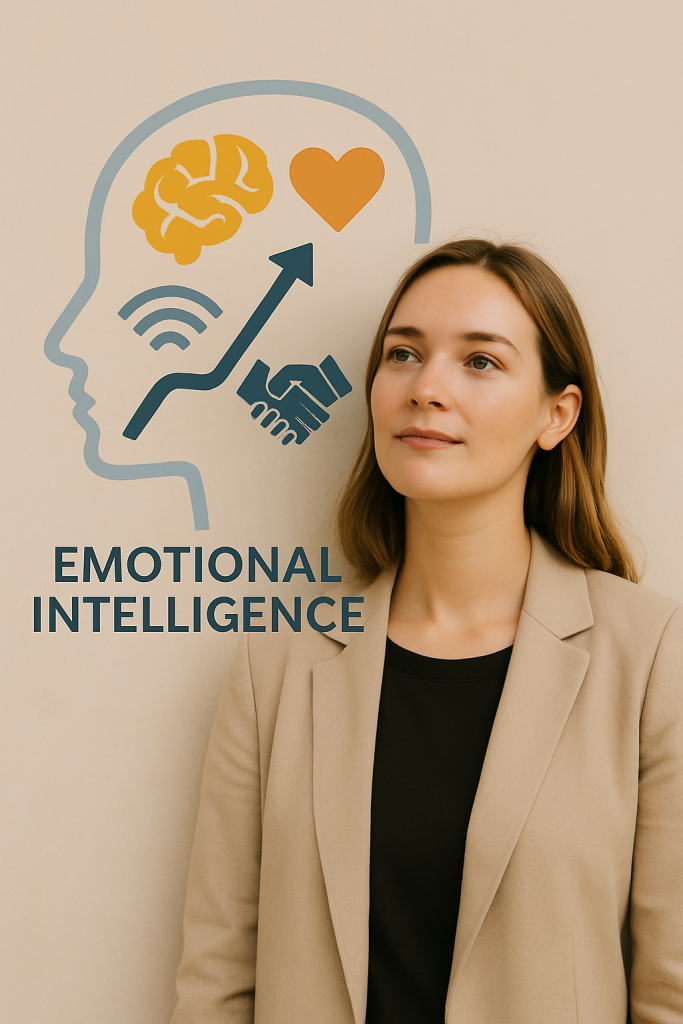
Building your Emotional Intelligence in Leadership
EQ is a skill you can strengthen through practice. Here’s how it plays out in leadership:
👁️ Self-awareness in action
You notice you’re feeling anxious before a team meeting. Instead of suppressing it, you pause, take a breath, and choose to speak with calm clarity.
🔁 Self-regulation in action
Someone gives unexpected critical feedback. You feel defensive — but instead of reacting, you listen, ask clarifying questions, and reflect before responding.
🎯 Motivation in action
You’re leading a project with setbacks. You keep the group focused not just on finishing the task, but on the deeper purpose behind it.
💬 Empathy in action
A colleague is quiet and withdrawn. You check in privately, offering space and support without pressure.
🤝 Social skill in action
You sense tension between two team members. You facilitate a respectful, honest conversation and help them rebuild trust.
💡 Note: Many women in leadership already practice high EQ — but may not name it as such. Claiming these skills as intentional strengths helps shift internal narratives like “I’m just being supportive” to “I’m leading with impact.”
👉 In the next section, we’ll explore how EQ and empathy come together in inclusive leadership practices — and how you can apply them to build trust, motivation, and resilience in the teams you lead.