
The term “ethical leadership” has several different interpretations. In a general sense, it refers to leading people based on moral values, integrity, transparency and fairness. The key characteristics of an ethical leader in a personal and professional context have been aptly summarized, for example, by Valeria Lo Iacono (2023):
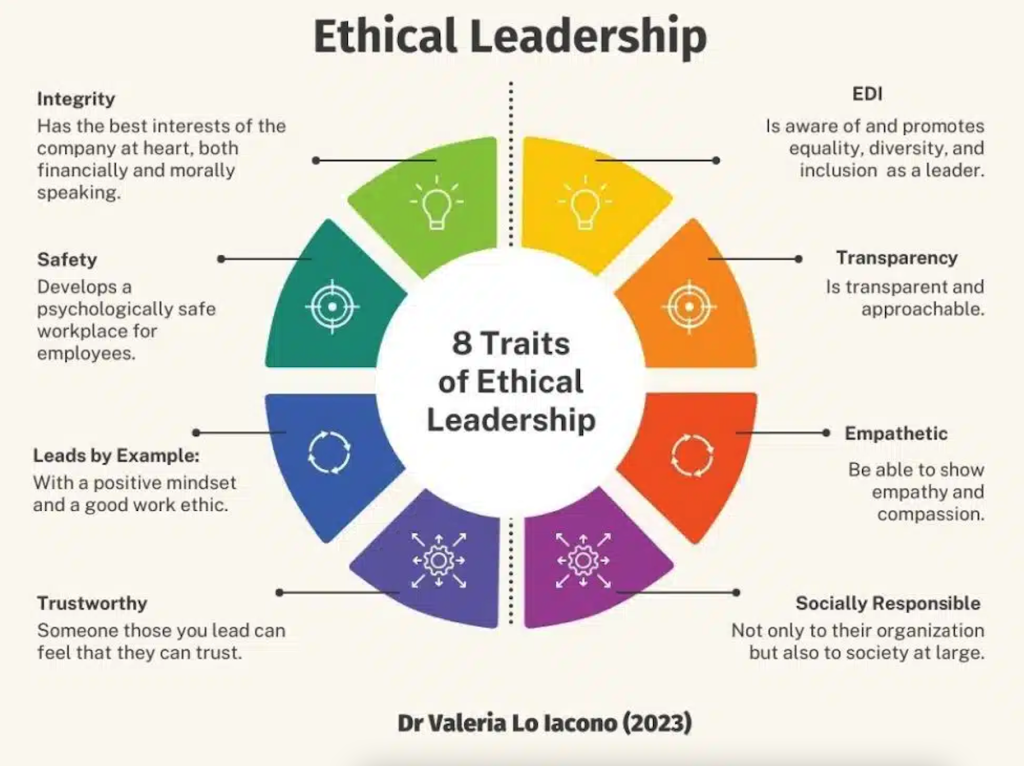
The Ethical Leader:
✅ has internal integrity, i.e., acts in accordance with personal and organisational values;
✅ promotes equality, diversity and inclusion (called EDI) in the teams in which he/she works and is fair to colleagues and subordinates;
✅ ensures a safe working environment in the workplace (i.e. a psychologically safe workplace);
✅ is transparent and open to communication on any topic;
✅ leads by example, is honest and has a positive work attitude and behaviour;
✅ shows empathy and compassion for others;
✅ is trustworthy and can be relied upon by subordinates;
✅ recognises the importance of social responsibility to both the organisation and wider society.
👉 From the above, it is clear that it is not enough to be a good manager to make teams and organisational environments work well. Without leading people based on ethical principles, we cannot expect employee trust and loyalty. Why is it important to promote ethical leadership in organisations and, by extension, in wider society? Find out in the following section.