
What is ethics and what are its origins?
As a philosophical discipline, ethics is concerned with the study of values and principles in terms of moral norms and moral action. It studies types of actions which distinguish between right and wrong.
The term “ethics” comes from the Greek word ‘ethos’, which means ‘custom, habit, character’.
The term “morality” comes from the Latin word “moralis”, which means manners, morals. It is understood commonly as a set of written or unwritten rules and norms that determine what is right and wrong conduct.
In a broader sense, ethics is considered to be a process of reflecting on morality – it involves questioning and discussing moral issues from different perspectives. There are various approaches to ethical reflection. In the context of gender and inclusion, for example, feminist ethics offers important insights. A well-known thinker in this area is Nancy Fraser, whose work focuses on justice, equality, and representation. For more background, you can explore this article: Feminist Ethics – Stanford Encyclopedia of Philosophy.
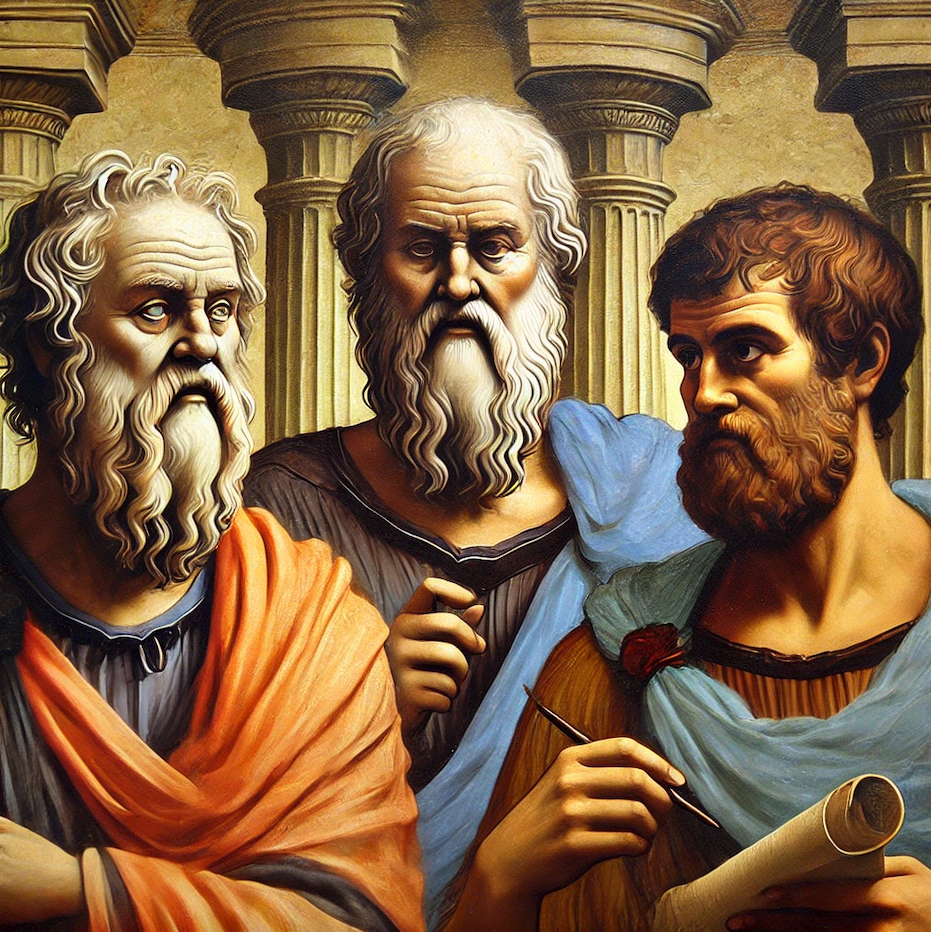
The origins of ethics are associated with Greek philosophers such as Socrates and his disciple Plato, who lived in 5th-4th century BC in Athens. Through his teachings, Socrates sought to raise the moral level of mankind and to guide them to right action. He is best known for his method of asking questions, which encouraged his students to actively learn and reflect on the moral aspects of their actions, a significant departure from passively listening to a teacher. His disciple Plato was also an important teacher and mathematician who further developed Socrates’ work, especially in the form of dialogues. His work had a significant impact on Western philosophy and provided a number of key insights into topics such as justice, virtue, goodness, truth, beauty and the immortality of the soul. Plato’s most important disciple was Aristotle, who, unlike his teacher, chose to include in his work not only questions of man and society but also broader knowledge of science, language, politics and art.
👉 It is almost beyond belief that the work of these philosophers has endured to this day and continues to be a source of value in the ethical and moral conduct of the Western world. The philosophers of ancient Greece were also the inspiration for many other philosophers who have developed their teachings to the present day. This rich heritage has also given rise to ethical leadership.