Before going deeper into the analysis of the barriers that prevent not only women from accessing equal opportunities, let us first look at the current situation of women’s representation in management positions in the European Union.
Where do we stand in Europe with regard to the representation of women in governing bodies?
A study by Deloitte in 2021 provided an interesting comparison of the situation of women in leadership globally. According to this study, women make up approximately 19.7% of company board members worldwide, with only 5% holding executive directorships. At this rate, gender parity in top management will not be achieved until 2045.
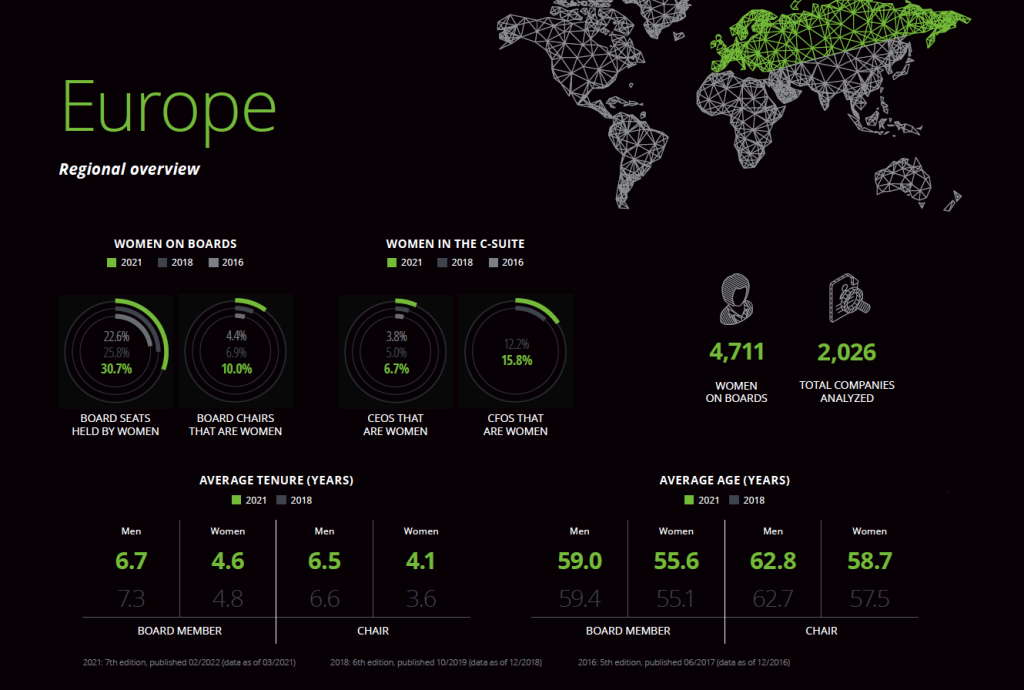
👉 These and other statistics also show that women are not only under-represented in management positions, but also face barriers to promotion, pay inequalities and prejudice. What are these barriers in particular? Find out below.
What are the most common barriers and obstacles for women in leadership?
Although our European society has made significant progress, women with ambitions to hold leadership positions still face numerous obstacles, both cultural and structural

Some of the most common barriers include:
❗ Prejudices and stereotypes
Even though we may feel that Western society has overcome many prejudices and stereotypes, we often fail to realise how deeply ingrained they remain in both men and women. According to an ILO (2019) study, organisations led by male executives are likely to have a predominantly male organisational culture. As a result, prejudices persist, such as the belief that mothers are less dedicated to their work compared to men or that women are not assertive enough to command respect.
❗ Work-family balance challenges
In most cases, women still bear the primary caregiving responsibilities. Caring for young children or other dependents often creates difficulties in balancing family and work life. Women frequently shoulder a disproportionate share of household duties, which can slow down their career advancement.
❗ The glass ceiling
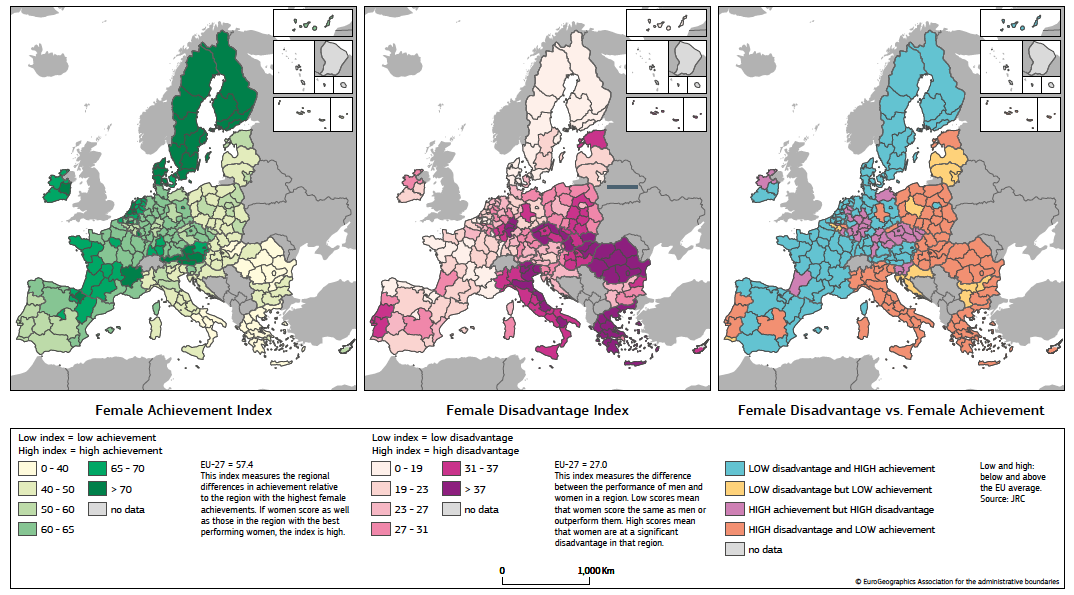
The glass ceiling refers to an invisible barrier that prevents women and other marginalised groups from advancing to higher leadership positions, even when they have the necessary education, qualifications, experience, and skills. This form of discrimination often results from a combination of biases, stereotypes, and structural obstacles. Consequently, women remain underrepresented not only in corporate leadership but also in politics, science, and other fields. You can see how this issue affects Europe in the following charts:
👉 Let’s now explore additional barriers that negatively impact gender equality in the following text.
❗Gender pay gap
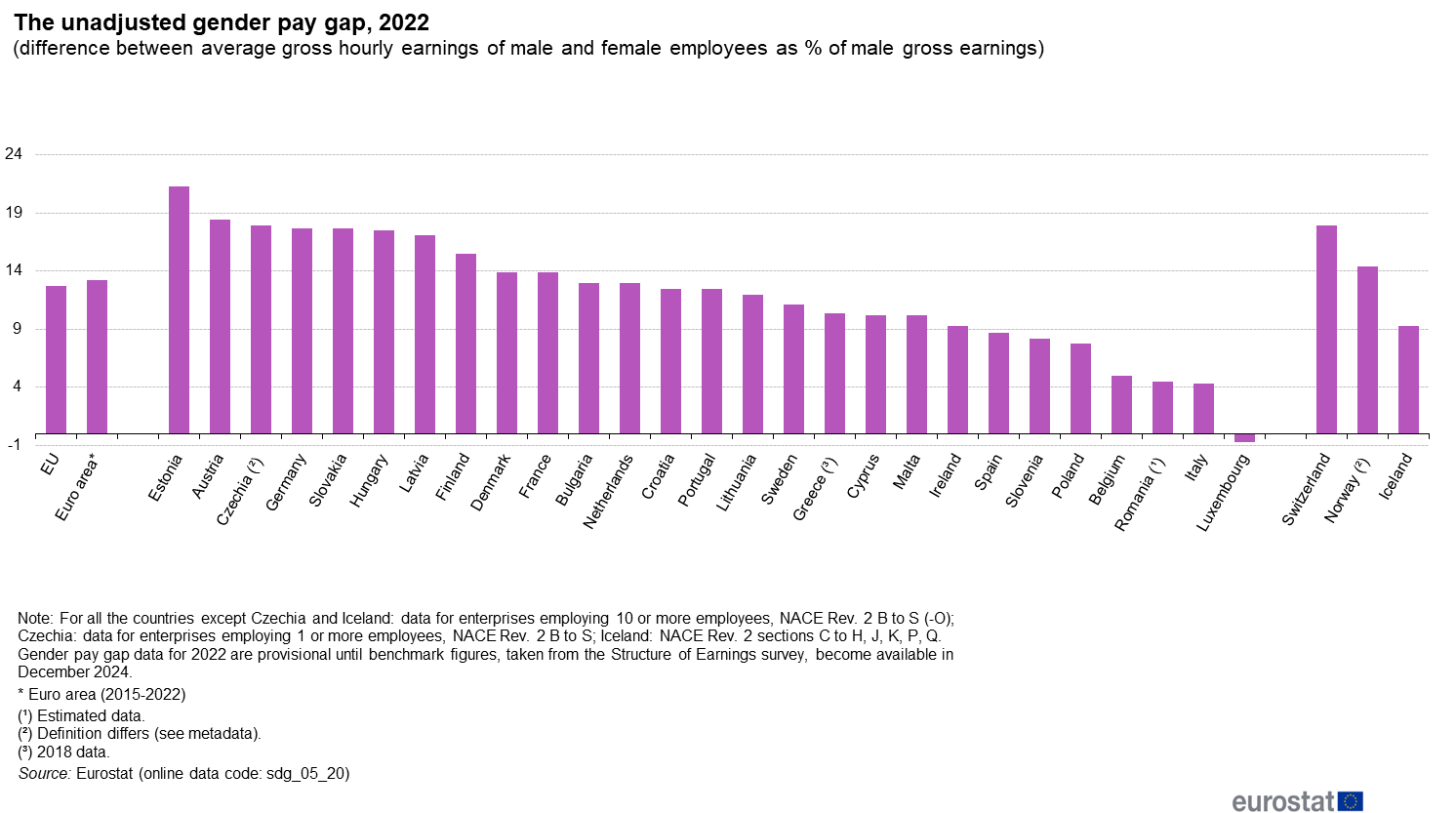
- Women still earn, on average, less than men, even when holding similar positions. This is a global issue. In the European context, wage disparities vary significantly. In 2024, women in the EU earned, on average, 13% less than men. The largest pay gaps were found in Estonia (21.3%), Austria (18.4%), and the Czech Republic (17.9%). Meanwhile, the smallest differences were recorded in Luxembourg (-0.7%), Italy (4.3%), and Romania (4.5%).
❗Lack of mentorship and networking
- Although the situation is improving with the emergence of career clubs, support networks, and mentorship programs for women, male-dominated professional networks still prevail. These networks are often gender-segregated, giving men more opportunities to build strategic relationships and access influential contacts.
❗Lack of role models and best practices
- Due to the underrepresentation of women in leadership positions, there are fewer examples of best practices and fewer female role models. Yet, stories of successful women have great potential to inspire others to persevere in their careers and actively work toward equal opportunities.
👉 Now that we know more about the barriers hindering women’s career advancement, what can be done? In the next section, you will discover practical tips on how leaders can actively support gender equality and foster an inclusive environment through ethical leadership.