We often hear how important it is to “set goals.” But what kind of goals are worth setting? True personal growth begins when your goals are deeply connected to your values and aligned with your long-term vision — not just with what others expect of you or what society defines as success.
Many women are conditioned to set goals that are safe, conventional, or aimed at pleasing others. But meaningful growth starts with asking yourself:
- What do I want from my life journey?
- What really matters to me — not just professionally, but personally too?
Goals that are internally motivated and value-based are more likely to lead to lasting fulfilment. For example:
- Instead of “get a promotion,” a deeper goal might be “grow into a role where I can lead others with integrity and impact.”
- Instead of “be more confident,” a meaningful version might be “learn how to speak up with clarity in spaces where I once stayed silent.”
When your goals reflect who you are and who you want to become, they serve as a compass, not a checklist.

Aligning life goals with values and long-term aspirations.
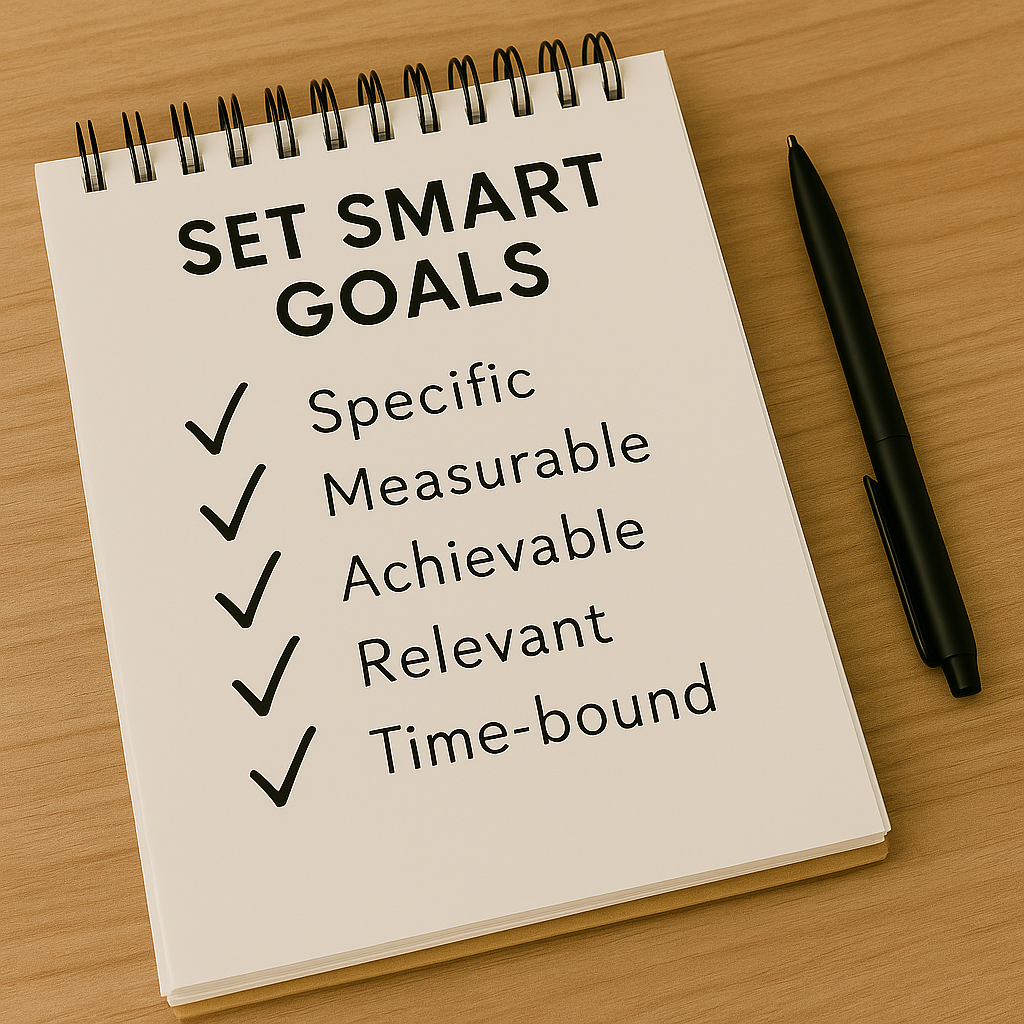
So how can you move from vague intentions to actionable goals? One powerful method is the SMART goal framework — goals that are:
✅ Specific – Clear and well-defined
✅ Measurable – Trackable over time
✅ Achievable – Realistic, but still challenging
✅ Relevant – Aligned with your values and aspirations
✅ Time-bound – With a clear deadline or timeline
Example:
❌ Vague: “I want to be more confident.”
✅ SMART: “I will attend 2 public speaking workshops within the next 3 months to improve my presentation skills and increase my confidence.”
But goal-setting isn’t just about planning — it’s about making space for change in your daily life. As you move forward:
- Stay flexible: Life happens. Goals may shift, and that’s okay.
- Celebrate progress: Every small step matters.
- Reconnect to purpose: Regularly ask yourself, “Why does this matter to me?”
👉 By setting meaningful goals that reflect your authentic self, you’re not only creating a plan — you’re honouring your growth. In the next section, we’ll explore how daily habits and routines can help you follow through on your intentions.