
We can’t imagine modern business today without the use of digital tools. Big companies have sophisticated technological processes, tools and tailor-made programs and applications. However, smart digital applications will also make things easier for small businesses, who can significantly increase their productivity through automation and reach and promotion for their products and services at a reasonable cost.
Digital tools bring many benefits to freelancers as well as aspiring or advanced small business owners. Let’s take a closer look at them:
✅ Accessibility and low cost
Apps and tools for small business can often be purchased without the need for a high initial investment
✅ Wider reach
Thanks to various e-commerce platforms and digital marketing tools, the sale of products and services can be significantly expanded to potential customers and other market segments without in-depth technical knowledge.
✅ Efficiency
Many tools can automate routine processes and contribute to business efficiency.
✅ Flexibility
Some of the digital business tools also allow customization according to individual needs and extensions, which can better tailor the tools to specific requirements.
👉 Now we’ll look at specific tools that are a good help for both freelancers and small business owners. They can help them with marketing, planning and administration, process automation, teamwork or finance. And they do it at a minimum cost.
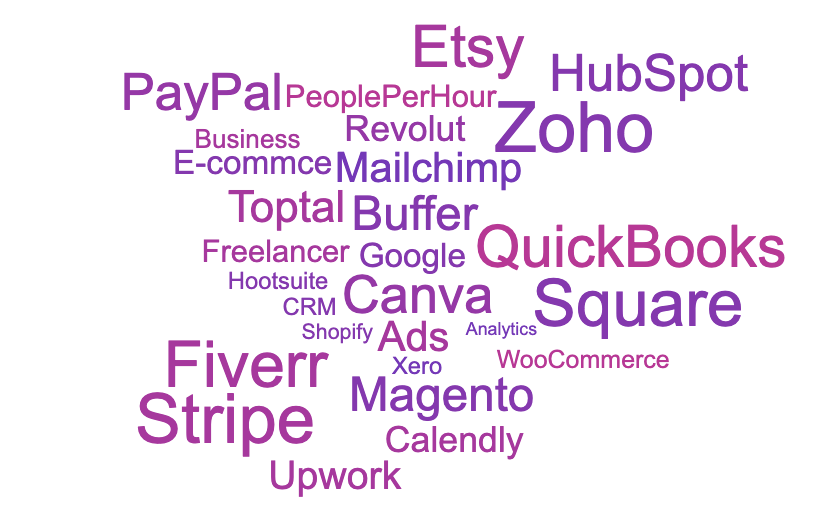
Overview of small business support tools
- Marketing tools
- Canva (a tool for creating flyers, posters, graphics, visuals, campaigns, newsletters and much more)
- Mailchimp (a tool for creating and automatically sending and evaluating newsletter campaigns)
- Google Analytics (tracking website traffic and user behaviour)
- Hootsuite, Buffer (scheduling and managing social media posts)
- E-commce
- Shopify, WooCommerce, Magento (tools for creating and managing e-commerce stores)
- Etsy (platform for makers of handmade products and selling them)
- Automation
- Google Ads (ad campaign optimization and scheduling)
- HubSpot, Zoho CRM (customer relationship management tools)
- Calendly (appointment scheduling automation)
- Platforms for freelancers
- Fiverr, Upwork, Freelancer, PeoplePerHour, Toptal (platforms for finding new opportunities and clients)
- Finance
- PayPal, Stripe, Square, Revolut Business (online payments and financial management)
- FreshBooks, QuickBooks, Xero (accounting software for small businesses)
📚 Resources:
-
Shopify Academy: https://www.shopifyacademy.com/
-
Grow with Google: https://grow.google/
-
Analytics for Beginners and Small Businesses: https://developers.google.com/analytics/learn/beginners
-
Canva Design School: https://www.canva.com/design-school/
-
Getting Started with Mailchimp: https://mailchimp.com/help/getting-started-with-mailchimp/
👉 You’re at the end of a chapter and your head may be spinning from the sheer number of tools the online world offers us. It’s sure to be a journey of discovery and you won’t get lost. And in the very next assignment you can try out some of the tools listed.