
The philosophical, political science, sociological, and economic and cultural studies writings on power fill entire libraries. These include the works of Thucydides, Thomas Aquinas, Niccolò Machiavelli, Thomas Hobbes, Montesquieu, Immanuel Kant, Georg Wilhelm Friedrich Hegel, Karl Marx and Friedrich Engels, Johann Gottlieb Fichte, Friedrich Nietzsche, Max Weber, Hannah Arendt, Niklas Luhmann, Norbert Elias, Johan Galtung, Susan Strange, Heinrich Popitz, Michel Foucault, Pierre Bourdieu, Simone de Beauvoir, Martha Nussbaum, Judith Butler, and many others. There is no single definition or explanation. Rather, there are various interpretations and perspectives on power.
Power
Let us first consider the word itself. “Macht” [power] has Proto-Indo-European roots and derives from the word “magh-,” which can be translated as “to be able, to be capable, can.”[1] The English word “power” is likewise derived from “to be able,” “to be capable,” or “force” and “strength.”[2]
The word “machen / to make,” in turn, goes back to “mak-,” which is translated as “to knead, fashion, form” / “to knead, fashion, fit.” It is therefore not directly related to “Macht” [power].[3]
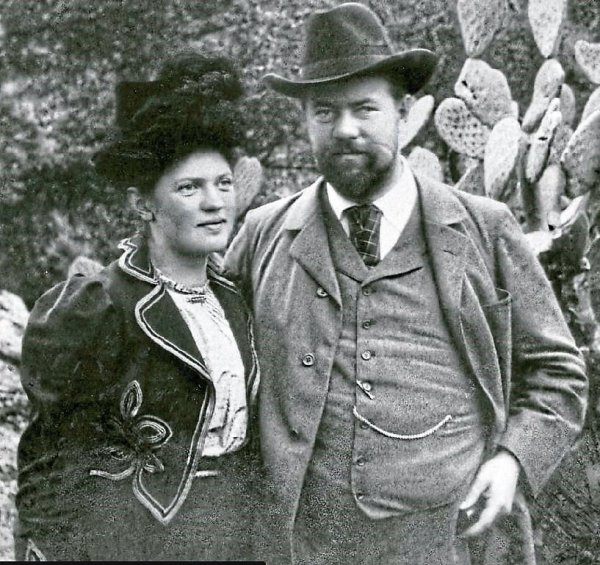
The sociologist Max Weber (1864–1920) coined an understanding of power that became a classic: “Power means every chance to assert one’s own will within a social relationship even against resistance, regardless of what this chance is based on.”[4] It can occur in various ways: within the family, between woman and man, in a company, at the employment office, through anonymous constraints, etc. Power can emanate from individuals, but can also be established through groups and organizations or through economic, technical, legal, and cultural-religious structures.
Domination
By contrast, for Weber, domination [Herrschaft] is a form of institutionally secured and thus socially recognized power: “Domination shall mean the chance to find obedience among specifiable persons for a command of a particular content.” Weber distinguishes three types of domination that can be considered legitimate:
- legal or rational domination, which is secured by agreed rules and structures and is tied to positions, not persons (e.g., a parliamentary system of government),
- traditional domination, which is based on belief in an immutable authority such as the king, and
- charismatic domination, which rests on the special charisma of a person and their role as a role model.
EXAMPLE
For centuries, the institution of marriage was defined in the sense of domination according to Max Weber. Women were supposed to be obedient to their husbands. This was enshrined in law. It was also legally and economically secured. As late as the 1970s, women in the former Federal Republic of Germany had to ask their husbands for permission to be employed. The power of the women’s movement, carried out through public criticism and protest, helped to break open this form of domination.
The power to act
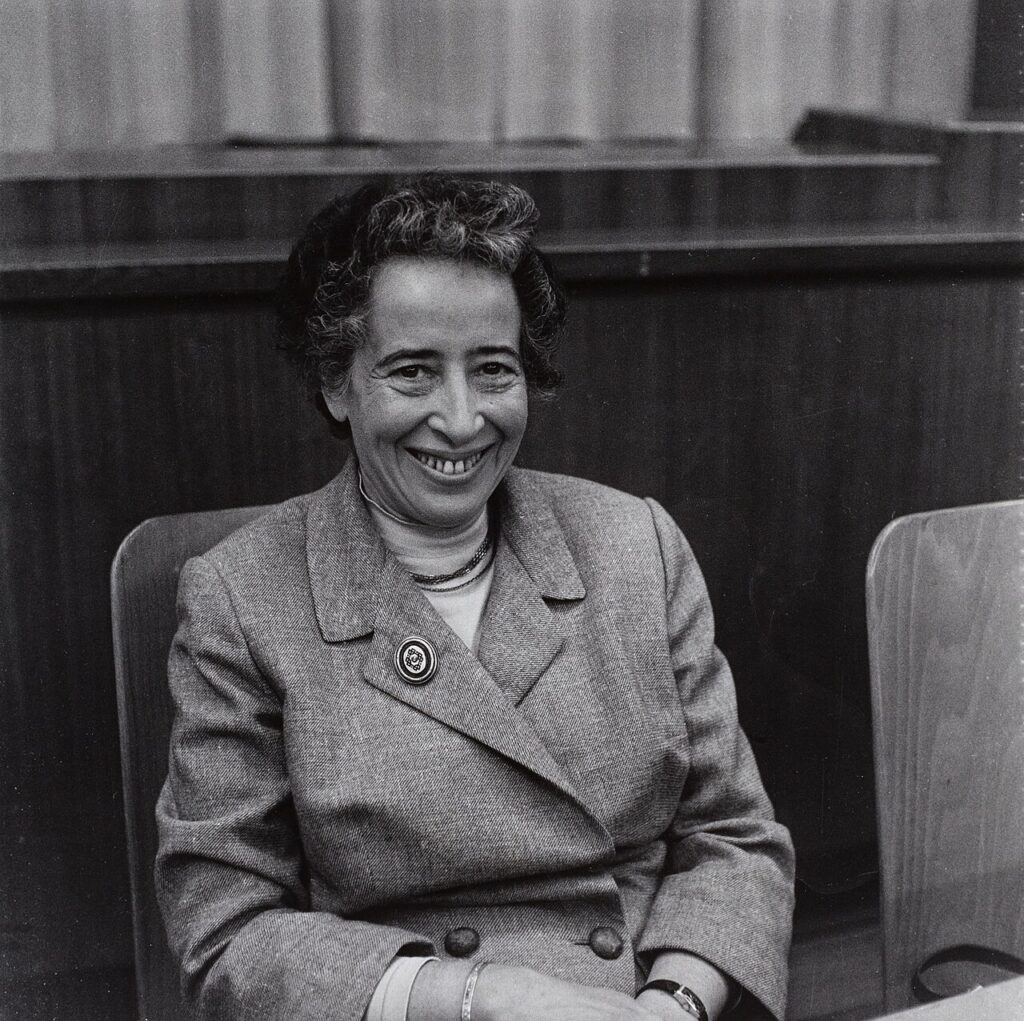
Such a collective or communal understanding of power can also be recognized in the view of Hannah Arendt (1906–1975), when she states:
Power corresponds to “… the human ability not just to act or to do something, but to join together with others and act in concert with them”. It arises “whenever people come together and act in concert”.[5]
While Max Weber recognizes in both power and domination an action that is directed ‘negatively’ at shaping others according to one’s own will, making them an instrument of one’s own interests (and thereby subjecting them to experience powerlessness), Hannah Arendt draws attention to communication, mutual understanding, joint action. She, too, conceives of power as a relationship, but not one of subjugation, but rather one of (self-)empowerment, and that in acting with others. (She connects power in the sense of domination and oppression with the concept of violence.)
Gender relations
With regard to questions of gender relations, Max Weber’s definition could describe many a ‘classic’ patriarchal demeanor, especially on the part of men, as well as openly repressive, gender-discriminatory structures. Hannah Arendt, in turn, could offer impulses for the idea of emancipation.
These perspectives on power are perhaps not entirely new. What is remarkable is that Hannah Arendt understands it less as a vertical relationship of “above” and “below,” but as the possibility that people join together horizontally, as it were, and do something. Both thinkers center on subjects (organizations, too, can be “subjects”). But what about structures and systems? Can power not also emanate from them? How could the workings of anonymous powers be described?
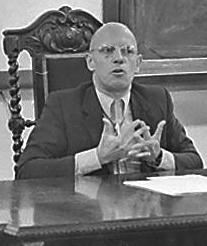
Michel Foucault (1926–1984) offers different approaches here. His gaze, too, is directed at the subject. But he analyzes it from the whole of “social relations.” However, not as Karl Marx once did, who addressed the socio-economic problems of exploitation, the compulsion for profit, and alienation. Foucault examines discourses. It is through these that subjects are first ‘produced.’
Discourse
What is a discourse? In everyday understanding, the word is often equated with “discussion” or “debate.” According to Foucault, a discourse comprises statements as they “circulate” in a society through texts, speeches, concepts, linguistic codes, definitions. More than that: discourses produce (unwritten) rules, establish ways of thinking and seeing, the sayable and the unsayable on a topic, the taboos.
EXAMPLE
Take, for example, the image of the “hysterical woman,” as it was widespread especially in the 19th century. While in antiquity this was linked to the notion that the female uterus “wandered” around the body, meaning the woman should best become pregnant so that this would stop, the psychoanalyst Sigmund Freud recognized hysteria as a mental illness (which could also affect men). Through photographs, articles, research, medical lectures, talks, and texts, the disease pattern of “hysteria” was “put into circulation” and enforced for a certain period. Linked to this was the notion of woman as the bearer of the emotional, the (potentially) crazy. In contrast, man appeared rational and coolly calculating. These discourses were led by men. [6]
The example also shows: discourses produce knowledge, and thus statements to which the status of a truth is attributed. Subjects are woven into discourses; their speech is not detached from this, but is enabled and limited by the diversity of other articulations. Nevertheless, they set their own marks, contribute their own statements. Foucault thus rejects the idea that subjects are autonomous, free, and exclusively anchored in themselves. Their thinking, feeling, and acting is (pre-)formed by social discourses.
The discourses themselves are thought of as mobile. They produce, and at the same time they and their production are “… controlled, selected, organized, and channeled through procedures whose task is to tame the forces and dangers of discourse and to ward off its unpredictable eventfulness.” [7]
From this perspective, it makes sense to think knowledge and power together. The knowledge that gains discursive validity in a society at a particular time is permeated by power. This does not mean that all threads converge in one center of power and that all discursive activities are controlled by it. Power happens, is an action, is a play of forces.
The discourse on the “hysterical woman” was based on knowledge about human beings and produced new knowledge; a knowledge that was used to control and more effectively govern “femininity” and women. Because with the construct of the “hysterical woman,” the female sex could be declared potentially crazy, and women could be excluded and controlled from politics, science, education, public opinion, and so on.[8]
Through discourses, the sayable and the unsayable are produced, made visible and invisible. Truth is accordingly the effect, a production of social power relations. Through it, what counts as true at a given time is determined.
Does that sound new? Does that sound different from what you’re used to? You know the famous example of Galileo Galilei (1564–1642)? When he published his findings on the Copernican worldview, he ran into trouble with the Inquisition. It was not until 1992 that he was rehabilitated by the Catholic Church; his findings had been able to prevail much earlier. Was it only the struggle between the claim to authority of an institution such as the Church and the progress of knowledge? What role does the population play in this? From what point is their goodwill needed to “make” truths into such? (to em’power’ truth as truth?) And is this all just talk? Foucault goes one step further.
Dispositif
Foucault expands the concept of discourse to include that of the dispositif. This refers not only to statements (discourses) but also to practices. These comprise concrete actions, but also, for example, the architecture of buildings, routines, seating arrangements in educational institutions, curricula and their structure, etc. Dispositifs prescribe what areas of society are to do and not to do.
EXAMPLE
Take, for example, the dispositif of the beautiful woman. Women are still often judged primarily by their appearance, and most have internalized this way of thinking themselves. The guiding model is usually the beauty ideal of the slim, youthful-looking, attractive woman. This ‘norm’ is reinforced, refined, and updated by old media, Instagram reels, TikTok, fashion trends, cosmetic surgeons, women’s magazines, etc. Especially young women all too often measure themselves against this norm and perceive themselves as deficient. Women adopt the beauty ideal and go on diets or wellness cures to better conform to it. In this way, they are not only the target of a beauty dispositif but also help put it into effect themselves. They are simultaneously subjected and self-subjecting. The power of the beauty dispositif has a norming, normalizing, and standardizing effect; it disciplines and directs the attention of all genders to this topic — and away from other questions. At the same time, new knowledge about the (female) body is generated: more successful diet models, refined surgical methods, measurement techniques such as body mass index, fitness and fat values, which make it possible to train, or discipline, the body even better in accordance with the norm.
“There are moments in life when the question of whether one can think differently than one thinks […] is indispensable.” [9]
Foucault does not examine dispositifs in order to pass judgment. Rather, his concern is to understand what characterizes our present — in which everyone is embedded. His intention is for people to look at their society from the distance of a stranger, to question what is taken for granted, to be able to wonder, and, by recognizing dispositifs, to free themselves from them and thus discover and try out new scope for freedom for themselves.
One might add: recognizing power games and power relations can also help to reduce estrangement and alienation between people. In the sense of Hannah Arendt, they can join together and assert their own accents in the play of forces.
Power is not limited to political institutions
Understanding what we think, how we think, and how our thinking is shaped by the discursive field of forces in society (including non-discursive practices) allows us not only to open our view to new possibilities but also to taking on leadership tasks. Analyzing power in such a way can open the eye to ambivalences, paradoxes, ruptures, and contradictions that characterize the world. This makes it easier to differentiate and to be open to new insights. It will also help in making long-term decisions. And finally, the sober analysis of a power constellation will help to perceive feelings of powerlessness, to see, by contrast, one’s own power in the play of forces, and thus to realistically assess one’s own power potential.
Does this sound “masculine,” evoking associations with struggle, the pursuit of fame, and greed for money? Seizing opportunities and thinking strategically need not go hand in hand with an elbow mentality and a loss of humanity. If reflected upon as an aspect of a power structure of which one is inevitably a part, this distancing can widen (inner) spaces for humanity.
Once again, the image of the elephant:
It is both the animal as a whole and the trunk that first makes it possible to recognize the trunk as such. In addition, there are other “trunks,” so to speak, namely the ears, the belly, the tail, etc. — that is, perceptions of events in society that become the subject of discourses. A discourse and dispositif analysis inspired by Foucault takes even more into account: the cultural technique of drawing, our understanding of education that leads us to illustrate a problem using an animal image, the (female) illustrator and her social context of knowledge, the question of where the images appear, who uses them or where they are deployed, where not, and how this influences the feeling, thinking, and acting of subjects, how they are disciplined and discipline themselves.
In this view, power relations and the production of knowledge do not occur solely through political officeholders, whether from national governments, courts, parliaments, or the European Commission, and that “vertically” in the style of command and obedience. Foucault thinks of them as horizontal, mobile, and multiple:
“Power is not an institution, is not a structure, is not a certain strength some are endowed with. Power is the name given to a complex strategic situation in a given society.” (Foucault 1977, 114)
It occurs in family, kindergarten, school, hospital, NGOs, companies, think tanks, prisons, in and through media, and of course also in authorities, parliaments, governments.
Gender relations as power relations
This means that society as a whole “… is an archipelago of different powers” (Foucault 1998, 281). Power thus means a social event that is not attached to things or persons, yet is contained in everything. Including, therefore, wherever gender relations occur. Moreover: if one assumes that power is constitutive for the political, then with Foucault’s approach to the phenomenon of power, the political is also inscribed in the entirety of society. And just as gender relations are permeated by power in the various spheres of society, so too are they political.
This acquires a certain explosiveness when one becomes aware that gender is a horizontal or cross-cutting category. Discourses on gender relations are often linked to those on work, division of labor, family, education — and power. Just as, conversely, insights are gained when discourses on, for example, pensions, housing, work are connected to the category of gender.
Gender justice and neoliberalism
EXAMPLE
A striking example of this is relating discourses on gender justice to those on neoliberalism. What does the word mean? It is the dominant economic-political paradigm of the present, which at the same time claims to apply to all areas of society. This is why it is also relevant for overcoming power gaps between the genders.
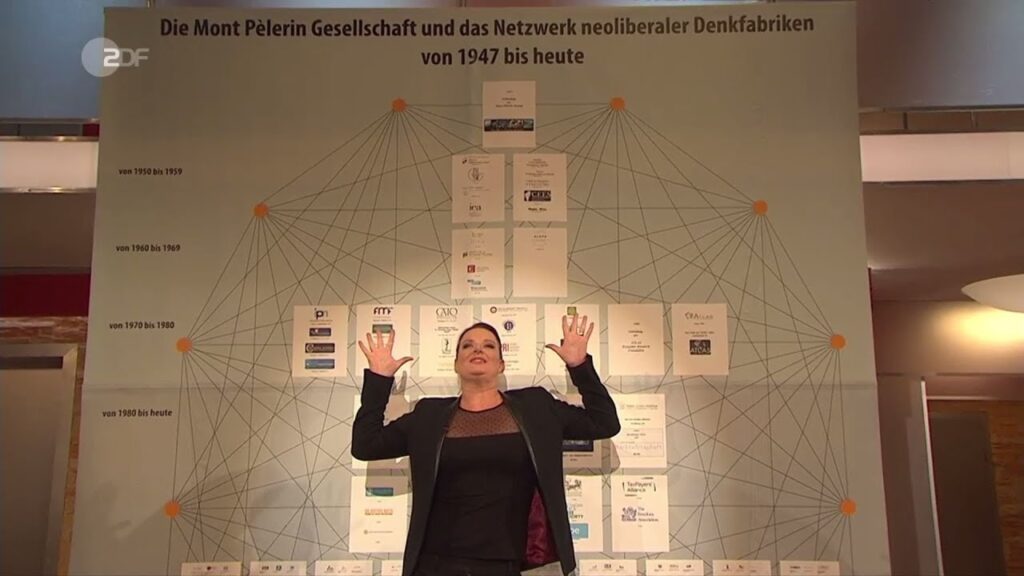
The International Monetary Fund (IMF) published the paper “Neoliberalism: Oversold?” in 2016 [10] and thereby accepted that the word does not mark a polemical term but reflects the reality of a socio-political strategy. Key points are privatization, liberalization, and deregulation, and, as a result, a noticeable increase in social inequality, precarious employment relationships, insecure pensions, lower tax contributions from the wealthy, and thus, overall, the systematic implementation of insecurity. Society, mathematically speaking, is interpreted as a function of the market, and not the other way around. States are weakened. In addition, one can conclude with reference to the text, this is accompanied by the de-thematization of the political. Attention is directed more toward the micro and meso levels of social action, support in one’s immediate environment, and less toward the discussion of property relations, corporate power, the emergence of wealth in contrast to poverty, and so on.
It should be noted that the ideas of neoliberalism essentially go back to three schools: the Austrian School, the Freiburg School, and the Chicago School. The latter has dominated for about fifty years. Its rise took its starting point with the coup in Chile in 1973 and first became effective in the ‘Western’ world through the policies of Margaret Thatcher and Ronald Reagan. And it provokes counter-movements: the rise of right-wing, authoritarian movements can also be interpreted as a reaction to social insecurities resulting from a neoliberally oriented economic policy, combined with a simultaneous desire for orientation in a complex world. However, the programs of conservative and right-wing parties themselves show a neoliberal economic-political orientation. It therefore seems paradoxical that quite a few citizens associate a social hope for stability and balance with voting for these parties.
And paradoxes also affect gender relations: in the neoliberal program, efforts for more gender justice are high on the agenda. Through gender mainstreaming, gender-sensitive language, funding programs for women, campaigns against domestic violence, and much more, progress has been achieved. At the same time, gender justice is being hindered, since the precarization of working conditions, low wages, low pensions, etc., as a consequence of neoliberal economic policy, affect women to a particular degree.
When right-wing conservative circles oppose what is referred to as “gender ideology,” this does not necessarily mean that this is per se associated with a rejection of gender justice — even though there are now efforts that are subsumed under “antifeminism.” The political scientist Eszter Kováts already noted in 2017 that feminism, the women’s movement, and successful women are perceived as part of the neoliberal political orientation and are held partly responsible for the social damage it causes.
(Kováts, 2017) [11] The rejection of “gender” can thus also be seen as a rejection of neoliberal impositions. However, because these are not openly named as a disciplining or power strategy, the social polarization is carried out in the style of a culture war — and the de-thematization of power strategies, or the silencing of social conflicts, is rather reinforced.
If awareness is sharpened for discourses and their power effects, for contexts in which activities to overcome the gender power gap may be successful, the following dilemma can be stated:
1/ Actors pursue the intention of gender justice.
2/ They move within a neoliberally charged discourse context, in which the realization of the goal of gender justice, and hence the overcoming of the gender power gap, appears ambivalent, contradictory, and mutually undermining.
3/ The economically liberal agenda provokes right-wing conservative reactions, as a result of which gender justice is hardly actively promoted, rather the opposite.
In other words: if advocates of gender justice disregard the paradoxical power effects of the overall societal context in which they operate, they risk, under the current circumstances of the 2020s, promoting exactly what they are fighting against: a relapse into patriarchal conditions.
Power occurs everywhere; it is not bound to political officeholders or political institutions. It happens in situations, in contexts, as a relationship of forces. Efforts toward greater gender justice, too, occur in a particular social environment. The neo- or economically liberal political strategy was cited as an example of this. On the one hand, it goes hand in hand with the promotion of gender justice. On the other hand, the precarization of working conditions, low pensions, and other factors affect women to a particular degree. The claim that they are secondary has a long history. Philosophers and scholars have contributed considerably to this view. How practical theory actually is. Let us take a closer look.
References:
[1]Cf. etymonline.com, https://www.etymonline.com/word/*magh-?ref=etymonline_crossreference (04/09/2025)
[2]Cf. etymonline.com, https://www.etymonline.com/word/power (04/09/2025)
[3]Cf. https://www.etymonline.com/word/*mag-#etymonline_v_52644 (04/09/2025)
[4]Weber, Max (2010, first published 1921): Wirtschaft und Gesellschaft. Grundriss der verstehenden Soziologie, Frankfurt, M., p. 38
[5]Hannah Arendt, Macht und Gewalt, Munich 1981 (4th ed.), pp. 45; 53
[6]Cf. Günther, Paula, Von Männern erfunden: Diagnose Hysterie als Machtmittel gegen das weibliche Geschlecht, 26.04.2023, https://www.qiio.de/von-maennern-erfunden-diagnose-hysterie-als-machtmittel-gegen-das-weibliche-geschlecht/ (04.09.2025)
[7]Faulstich, Peter, Aufklärung — Der Zugang zum Wissen und die Macht seines Gebrauchs, n.d., https://www.die-bonn.de/doks/report/2011-theorie-der-erwachsenenbildung-01.pdf, p. 7
[8]Cf. Günther, Paula, Von Männern erfunden: Diagnose Hysterie als Machtmittel gegen das weibliche Geschlecht, 26.04.2023, https://www.qiio.de/von-maennern-erfunden-diagnose-hysterie-als-machtmittel-gegen-das-weibliche-geschlecht/ (04.09.2025)
[9]Ziegler Dr., Walther, Foucault in 60 Minuten, https://www.youtube.com/watch?v=mY8xqn9MYbI&t=609s, min. 56:02 (04/09/2025)
[10]Ostry, Jonathan D. / Loungani, Prakash / Furceri, Davide, Neoliberalism: Oversold? Finance & Development, June 2016, Vol. 53, No. 2, https://www.imf.org/external/pubs/ft/fandd/2016/06/ostry.htm (04/09/2025)
[11]Kováts, Eszter, The Emergence of Powerful Anti-Gender Movements in Europe and the Crisis of Liberal Democracy. In: Gender and Far Right Politics in Europe. Springer International Publishing, Cham 2017, pp. 175–189