
The discourses on the “naturalization” of women, their restriction to the role of housewife and mother, their claimed intellectual and physical inferiority, the production of female and male role models, stereotypes, and prejudices have triggered counter-movements especially since the 19th century. A central field of argumentation then and now has been the critique of patriarchy.
What does “patriarchy” mean?
Put simply, the term describes forms of social coexistence that are dominated and controlled by men or fathers. They encompass certain social norms, values, role definitions and expectations, relations of production and ownership, hierarchies, power relations, and more. Some authors also associate this with ownership relations that allow men to dominate economically (Friedrich Engels [1884], for example, links patriarchal conditions with the emergence of private property).
Analyses and critiques of patriarchy are diverse and set different emphases. Below, one author is honored who develops an understanding of power that is inspired, among others, by Hannah Arendt. In addition, a brief look will be taken at the discoveries concerning a presumed matriarchal Danube civilization.
Christina Thürmer-Rohr: love for the world
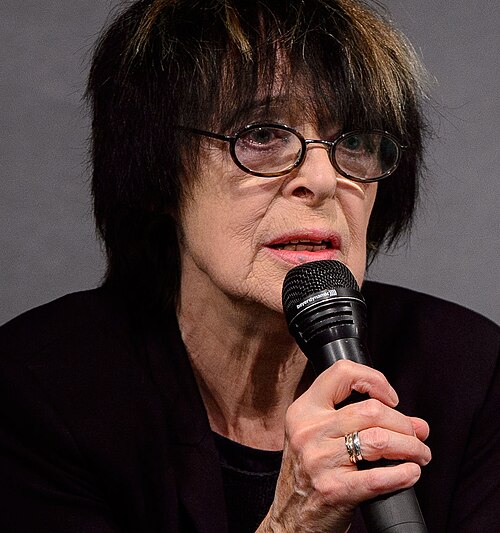
The professor of women’s studies in Berlin (1936–2026) holds the thesis that women are complicit [Mittäterinnen] in the patriarchal system. They would not be exclusively victims of patriarchy; rather, their actions serve the system. For Thürmer-Rohr, feminism therefore means swimming against the current. “The mainstream is a wretched and, moreover, not a harmless body of water.” [1]
She sees this not only at the level of individual women’s actions, but also connects it with a political dimension: “Feminism is social critique.” For Thürmer-Rohr, this means understanding the present as well as knowledge of the past. With reference to Hannah Arendt (1906–1975) and her concept of plurality, she advocates “understanding people in the plural rather than the singular and recognizing difference.” This is “synonymous with ‘love for the world.’” [2] From Hannah Arendt, Thürmer-Rohr also adopts the idea of “groundlessness.” This existential experience can trigger one’s own, independent thinking. Women should allow this. It is about an “existentially motivated learning with an open outcome, about the attempt to experiment at the limits of pain.”[3]
This is not a solitary search, discovery, and trial. Thürmer-Rohr pleads for friendship “(…) or befriending the world and caring for the world through befriending various people.” In this, “the freedom of consent to the other becomes clear.”[4]
Thürmer-Rohr thus reveals an understanding of power that, alongside the analytical dimension of critique, favors relationships between people. Power is therefore conceived less as “power over” others, but rather as “power with” others. This has a certain social radiance insofar as it positively conceives of, and takes as its starting point, the existential experience of “being thrown upon oneself” (Heidegger) and of feeling like a stranger, so that women can explore and bring to life new ‘terrain.’ Moreover, she thereby recognizes plurality and sees in it no contradiction to joint action.
Women can thus learn from one another. They can further develop their own thinking along their own perceptions, experiment, express themselves, and change the world in the love for the world.
The Danube civilization of Old Europe — a matrifocal culture?
Critique of patriarchy also goes hand in hand with the exploration of forms of community and society other than patriarchal ones. Especially since the second half of the 20th century, matriarchal or matrifocal cultures have been researched. The Lithuanian archaeologist Marija Gimbutas conducted numerous excavations in Southeastern Europe and assumes that more than 6,000 years ago there existed an egalitarian, peaceful high civilization of Old Europe with a belief in a “Great Goddess.” Around 4500 BCE, this was gradually transformed by warlike Indo-European horse peoples into new social structures — which were hierarchical and characterized by violence.
The extent to which one can speak of a matriarchal cultural sphere is controversially discussed. Some researchers reject the assumption of the existence of structures that were not warlike. Matriarchy researchers themselves, however, do not speak of a “rule of women” as opposed to a “rule of men” (patriarchy). Rather, they emphasize that the civilization of Old Europe — in the countries of the former Yugoslavia, Bulgaria, Romania, Hungary, Western Ukraine — was based on equality between the genders. At the same time, differences were respected. Political decisions were made by consensus, and great importance was attached to the spiritual dimension. Nature was perceived more as something divine, and the relationship to it was understood according to the principle of giving and taking. The equality between the genders, the spiritual veneration of female creative power, the principle of cooperation rather than exploitation appear to have been the basis for two thousand years of peace in Old Europe.[5]
This brief reference to the Old European civilization may illustrate that power can also be organized differently than current social orders suggest. This opens up perspectives for thinking about power differently, anew — and also for opening up new possibilities of influence for women.
Many other writers, artists, journalists, and scholars have exercised, and continue to exercise, criticism of patriarchal conditions.
References
[1] [2] [3]Siebrasse, Brigitte
[4]Thürmer-Rohr, 2003, p. 90, in: Czollek / Perko
[5]Lüpke, Geseko von, Die große Göttin. Das Rätsel der alteuropäischen Donau-Zivilisation, manuscript of the RBB Kultur radio broadcast, 16.04.2023, editor: Anne Winter; a production of Bayrischer Rundfunk