
Gender difference is a perennial subject of discourses. Through these, perceptions have been and continue to be pre-structured over the centuries, “truths” about what is recognized as social reality are produced, power relations are negotiated, and dispositifs of action are formulated. Numerous discourses also related to the claimed lesser worth of women and the domination of the female body.
Jean-Jacques Rousseau (1712–1778)
The philosopher revolutionized views on pedagogy with his novel “Émile, or On Education” (1762). The ideas found their way into numerous (reform) pedagogical concepts. He formulated the principle of letting adults be adults and children be children. What is meant by this? The development of a child should proceed in accordance with its needs and respective abilities, in harmony with nature, or its own nature. A healthy way of life — exercise, a vegetarian diet — was considered essential for this. Education should be oriented toward a free personality, philosophically and practically educated and capable of forming its own judgment. It was not just about imparting knowledge, but about stimulating the joy of acquiring knowledge.
The fifth part is titled “Sophie, or Woman.” It quickly becomes apparent that her actions and aspirations are always oriented toward the man, and that no independent development grounded in her own talents is reserved for her. It stands to reason that Rousseau’s general reflections on child-appropriate education were therefore written with boys and young men in mind.
Rousseau postulates that woman exists in order to please man and to submit to him. She should care for him, advise him, console him, and “sweeten” his life:
Thus the whole education of women must be oriented toward men.
To please them, to be useful to them, to be loved and esteemed by them, to raise them when they are young, to care for them as men, to advise them, to console them, to make their existence agreeable and sweet: these are the duties of women at all times, and this is what must be taught to them from childhood. As long as one does not return to this principle, one moves away from the goal, and all the rules one establishes for them serve neither their happiness nor ours. [1]
Her purpose in life was to be a housewife and mother, and to cultivate her mind for this purpose. However, her education was limited by this, her mission of being there for the man. Philosophy and the natural sciences were not part of it. The man thinks, creates, researches; the woman reflects and observes. A passive role falls to her.
How is this fundamental inequality between the genders justified? Rousseau derives it from the way in which both genders shape sexuality. He assumes that the man always takes the active part and the woman the passive one. From this, Rousseau derives and generalizes the roles he assumes for man and woman respectively.
The consequences of these lines of thought are far-reaching. The philosopher Immanuel Kant, for example, adopted them almost verbatim. In his writings, in which he formulates ideas for a civil constitutional state, he explicitly excludes women from the exercise of civil rights such as participation in elections, political co-determination, and the like.
This brief appraisal of Rousseau shows: patterns of thought that determined everyday thinking across generations are not merely general, vague considerations. They have their origin in the concrete reflections of a few thinkers.
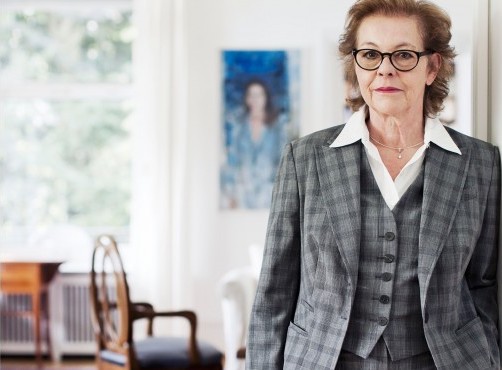
Claudia Honegger (b. 1947)
The Swiss sociologist Claudia Honegger published the work “Die Ordnung der Geschlechter. Die Wissenschaften vom Menschen und das Weib, 1750–1850” [The Order of the Sexes: The Sciences of Man and the Female, 1750–1850] in 1991. In it, she traces the process of the “coding of the genders” from the Enlightenment to the middle of the 19th century. She does this on the basis of scientific writings from this period.
Her thesis is that in the second half of the 18th century, i.e., in the Age of Enlightenment, the relationship between the genders was still reflected upon with reference to politics and society. When anthropology then emerged as the science of man, questions of gender difference were discussed primarily under the sign of the “nature” of man and woman. Alongside anthropology, the “science of the female” also emerged. This made doctors the ones who, equipped with the authority of their science, portrayed the “nature” of women — into which their assumptions about femininity flowed.
Honegger states that a hundred years later, i.e., around the middle of the 19th century, gender difference was no longer a subject of political debate. Rather, the discourse on it had been displaced, as a consideration of the “nature” of women, into the newly emerging field of gynecology. The feminine and woman were depoliticized into an object of scientific observation. As a result, the distribution of power between man and woman was “scientifically” justified — and demanded as something to be created, as this quote shows:
The two sexes relate to one another as the universal and the particular. One is the creative, truly generative, positive element; the other is merely the receiving, negative element, and the entire process of generation is only an annihilation of all the negativity of the feminine through the positive, animating force of the masculine.[2]
It is also notable that, with the discursive containment and determination of the feminine, or of the role of women in society, a mode of thinking is promoted that is binary in orientation: active-passive, universal-particular, strength-weakness, etc. Complexity, paradoxes, contradictions, dynamics are systematically blanked out. This happens to the detriment of the acceptance of plurality, and thus also of the diverse realities of life of women — as well as men.
Jean-Jacques Rousseau, Immanuel Kant, scientists of the 18th and 19th centuries, and very many thinkers, institutions such as the churches, and other influential figures before them have repeatedly tried to bring women, or the feminine, under control. Central to this was the claim that they were a kind of “second-class creature,” derived their worth through the man, and existed above all to bear and raise children. But there was and is criticism of this, criticism of patriarchy.
References
[1]Quoted from: Snow, Maria, Der Geschlechtscharakter in Rousseaus Werk „Émile oder Über die Erziehung“. Eine kurze Analyse, 2019, https://www.grin.com/document/982747 (05/09/2025)
[2]Honegger, Claudia, Die Ordnung der Geschlechter. Die Wissenschaften vom Menschen und das Weib, 09/01/2014, http://claudiahonegger.ch/die-ordnung-der-geschlechter/ (05/09/2025)