
“In the beginning was the word…”: progress toward greater gender justice has always been preceded by an “exit from (self-imposed) invisibility.” Prominent examples of this are Olympe de Gouges’ writings and her “Declaration of the Rights of Woman and of the Female Citizen” during the French Revolution of 1791. Likewise, in the course of the bourgeois revolutions of the 19th century, the Paris Commune of 1871, the first and second women’s movements of the 20th century, the strikes of women workers, and the organization of a Women’s Day to enforce women’s suffrage, and many more actions, brought about a conflict-ridden and slow, yet gradual and sustained, change in public opinion. This was the basis for the enforcement of liberté and égalité for women as well, and thus for the right to self-determined abortion, access to education, taking up employment, and much more. A kind of catching-up democratization for the “other sex.”
This publicly provoked process of learning and insight within a society set a shift in awareness in motion, very delayed and over decades. And it helped shift the coordinates of power relations. For public pressure sets limits. Public pressure also produces something new, and it prompts (hopefully) self-reflection. Being in the negative light of the public eye is shunned by most. Women’s and other democratic, social movements have gradually drawn their power from this.
This power of the public sphere can also work in the opposite direction: as a corrective that may prevent women from corrupting themselves once they are in positions of power.
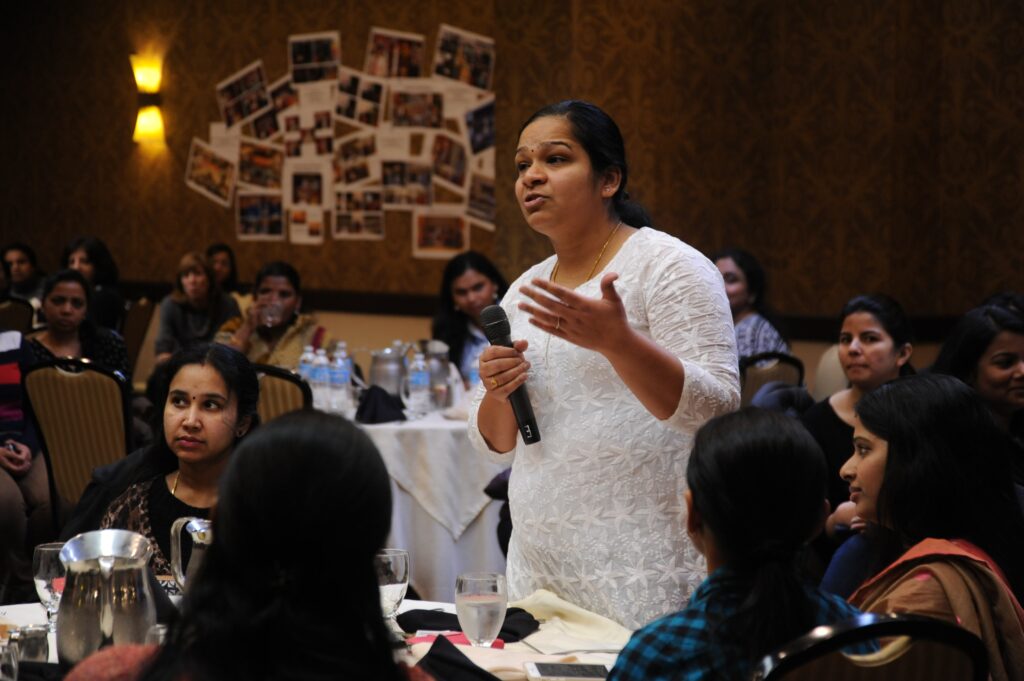
The public sphere
But what does the public sphere mean, and to what extent is it itself permeated by power relations? In principle, it is a matter of understanding between different actors and groups in a society on the basis of arguments. The philosopher Jürgen Habermas worked this out for the Age of Enlightenment in the 18th century and for present-day representative democracies. [1] Like many others, he notes a structural transformation of the public sphere since the advent of Web 2.0 and thus of social media.
Indeed, with Facebook, Instagram, TikTok, journalistic blogs financed through citizen donations, YouTube channels, and the new occupation of “influencer,” other media have emerged. On the one hand, they allow citizens to inform themselves, without the mediation (“medium”) of an established old medium (newspaper, magazine, TV station, radio station, state-financed or part of a corporation), through other citizens. On the other hand, the existence of the new media and the platforms through which they attain public attention is accompanied by a loss of significance for the old media. This is shown, among other things, by the fact that advertisements are increasingly placed on platforms, and the old media face serious competition for click numbers and attention. In addition, since around 2015, associations, foundations, and ‘fact-checkers’ have increasingly emerged, often financed by the state and/or by large private foundations, which in turn assert their own contributions in the struggle over interpretive authority.
Women, and whoever supports the concerns of gender democracy in the struggle for visibility and the overcoming of discrimination, can thus try to win other people over to their goals through a multitude of channels. There also remain the ‘classic’ forms of articulation: demonstrations, discussion circles in living rooms or restaurants, one’s own publications, events, congresses, art, citizens’ theater, and many more.
Women are both actors and recipients of public discourses, and thus of the struggles over what is to be regarded as “true” at a given time. The debates, sometimes conducted bitterly and without humor, also indicate what power falls to the audience in this. It is the citizens who ultimately decide which views presented they wish to adopt and which not. Women too.
Reference
[1]Habermas, Jürgen, Strukturwandel der Öffentlichkeit: Untersuchungen zu einer Kategorie der bürgerlichen Gesellschaft, Frankfurt 1962, and Habermas, Jürgen, Ein neuer Strukturwandel der Öffentlichkeit, Berlin 2022