
Technological innovation does not occur in a vacuum — it reflects the social, political, and economic forces of its time. Every software, platform, or algorithm is shaped by the perspectives and values of the people who design them — and for much of modern history, those people have largely been men.
As a result, the digital world has often mirrored the offline world’s imbalances. Technologies have not only failed to address gender inequality — they have, in many cases, reinforced it.
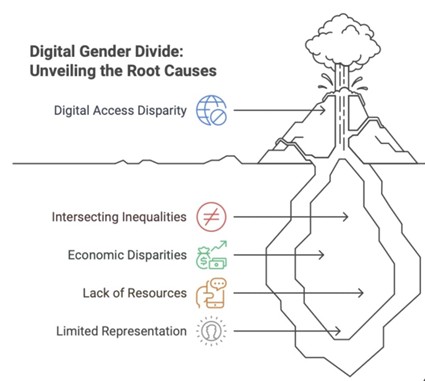
The gender gap in STEM (Science, Technology, Engineering, and Mathematics) is not just a numerical issue. It is a complex web of systemic exclusion: unequal access to quality education in early years, gendered career expectations, deeply embedded stereotypes about women’s “natural” abilities, a scarcity of visible role models, and institutional biases in hiring and promotion. These factors combine to limit women’s entry, retention, and advancement in tech-related fields.
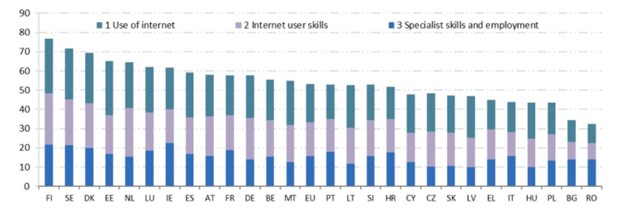
In emerging fields like artificial intelligence (AI) and data science — which are redefining economies, politics, and societies — the lack of gender diversity is particularly striking. Women make up less than 20% of AI professionals in Europe, according to a 2023 UNESCO report, and occupy less than 10% of executive leadership positions in major tech companies. The disparity is even greater for Black women, Indigenous women, trans and non-binary people, and women from economically disadvantaged regions.
Why does this matter? Because AI tools are now influencing some of the most critical areas of life:
- Hiring and recruitment systems determine who gets called for an interview.
- Healthcare algorithms inform diagnoses and treatment pathways.
- Facial recognition is used in policing and surveillance.
- Credit-scoring algorithms decide who gets a loan or mortgage.
When these tools are designed and trained primarily by white, male, Western developers — often using biased or incomplete data — they risk replicating and amplifying the blind spots of their creators.
This isn’t hypothetical. From Amazon’s now-abandoned recruitment AI (which penalized applicants with women’s colleges on their resumes), to facial recognition systems that misidentify Black women at alarmingly high rates, the consequences of gender bias in tech are very real.
Moreover, intersectionality matters. Gender does not exist in isolation — it intersects with race, class, ability, sexuality, geography, and more. A disabled woman of color from the Global South will face vastly different barriers to digital access and inclusion than a white, middle-class woman in Europe.
According to the International Telecommunication Union (ITU, 2023), globally 62% of men are using the Internet compared to only 57% of women. The divide is sharper in low-income countries, where only 30% of women are online compared to 43% of men. UNESCO further highlights that women in the Global South are 20% less likely than men to own a smartphone and significantly less represented in digital skills training programs. These figures confirm how intersecting inequalities in gender, geography, and class reinforce barriers to digital participation.
Thus, understanding how gender operates within technological development is foundational to building more equitable digital futures — futures in which women and gender-diverse people are not only passive users or consumers, but creators, innovators, and decision-makers shaping the tools of tomorrow.