
Culture shapes policy — but policy also shapes culture. Institutional change requires structural scaffolding, and this is where progressive, gender-sensitive policies play a critical role. Whether within companies or across national governments, policy can either perpetuate systemic inequality or become a vehicle for transformation.
Internal (Company-Level) Policy Innovations
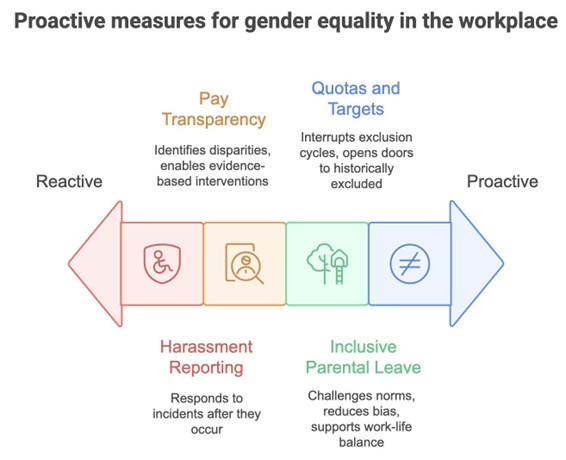
Organizations have the power to model equity through their internal systems. Some of the most effective measures include:
- Pay Transparency and Salary Audits
Closing the gender pay gap starts with knowing where disparities exist. Transparent compensation frameworks and regular equity audits allow for evidence-based interventions. - Inclusive Parental Leave
Offering generous and flexible leave for all caregivers (not just birth mothers) helps challenge the norm that caregiving is a “female issue.” It reduces hiring biases against women and supports work-life balance for everyone. - Harassment Reporting and Protection Mechanisms
Safe, anonymous reporting channels and zero-tolerance policies against harassment or discrimination are essential. These must be backed by action, not just statements.
Quotas and Targets
Equity quotas for leadership roles or funding allocations may feel controversial, but they interrupt cycles of exclusion and open doors to those historically shut out.
Government and Policy-Level Interventions
Governments have the resources and authority to influence broader systems. Gender-equitable tech futures can be supported through:
- Public Investment in Inclusive Digital Infrastructure
Ensuring rural internet access, accessible digital tools, and gender-sensitive cybersecurity measures is essential for equitable participation in the digital economy. - Funding for Women-Led Innovation
Grants and venture capital incentives for women and non-binary tech entrepreneurs help close investment gaps and stimulate local economies. - Gender and Tech Policy Frameworks
National strategies can link digital transformation with gender justice, aligning technological progress with inclusive societal development. For example, the EU Gender Equality Strategy now integrates digital inclusion into its core objectives.
The Role of Civil Society
NGOs, activist collectives, and grassroots campaigns bridge the gap between policy and practice. They offer expertise, pressure institutions to change, and keep conversations grounded in community realities.
Organizations such as:
- Access Now (advocating for digital rights)
- The Association for Progressive Communications (focusing on women’s access and safety online)
- Digital Action (fostering civic tech for accountability)
… play a vital role in ensuring that gender equity in tech is not optional — but essential.