
Creating inclusive technology spaces requires more than diversity targets or isolated initiatives — it demands a fundamental reimagining of how power operates in tech. Historically, technology development has favored hierarchical, exclusionary environments, often marked by competition, gatekeeping, and homogeneity. These cultures reinforce dominant norms, marginalizing those who do not conform to established expectations — particularly women, gender-diverse individuals, and people from the Global South.
Inclusion must become a living, breathing culture — a way of working, hiring, collaborating, and listening.
Redefining the Culture of Innovation
Inclusive tech environments:
- Prioritize collaboration over competition, recognizing that innovation thrives in psychologically safe and diverse spaces.
- Encourage reflexivity and feedback, welcoming critique as a tool for growth rather than a threat to authority.
- Center emotional and cultural intelligence, recognizing that logic and empathy are not opposites — they are complementary in good design.
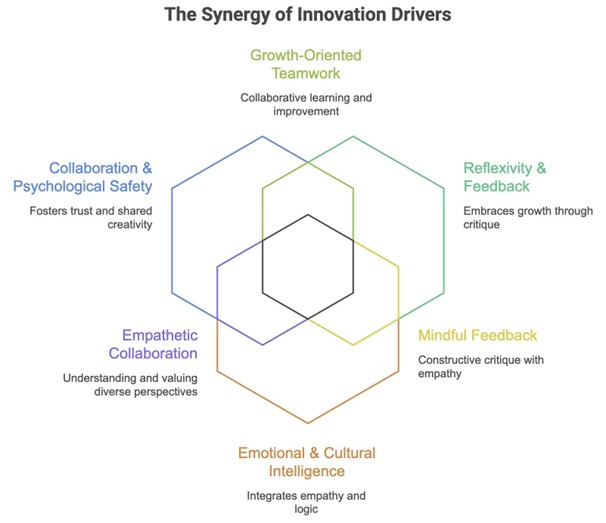
In these environments, diversity is not just represented — it is respected and empowered. People are not expected to “fit in”; rather, the space adapts to support multiple ways of knowing, creating, and leading.
Case Studies: Inclusive Organizations in Action
- ThoughtWorks
Globally recognized for integrating inclusion into its core. From bias-conscious hiring to mentorship programs for marginalized developers, ThoughtWorks treats diversity as a strength that powers its innovation. - Mozilla Foundation
Beyond developing open-source tools, Mozilla builds tech for social good. Their work around ethical AI, accessibility, and gender inclusion includes community grants, transparency reports, and open-data initiatives that invite participation from outside traditional tech spheres. - Ada Developers Academy
A non-profit coding school offering free, full-time software development training to women and gender-expansive individuals, especially from marginalized racial and economic backgrounds. Their immersive approach includes internships with partner companies, reshaping hiring pipelines from the ground up.
Inclusion as a Practice
Too often, inclusion is treated as a checkbox — a one-time training or a token hire. But real inclusion is ongoing and collective. It requires:
- Regular evaluation of company practices and culture.
- Leadership accountability, with metrics tied to equity goals.
- Community consultation, especially when building products that affect vulnerable groups.
- Flexibility and humility, acknowledging that inclusion work is never “done.”
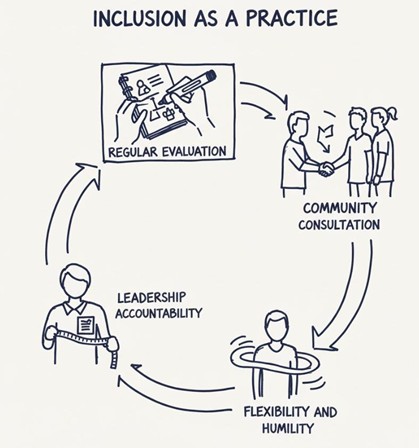
Image generated using NAPKIN AI (2025).
Inclusive tech spaces are not only fairer — they are smarter, more creative, and more sustainable in the long term. They are spaces where people flourish and technology follows.