
While women are often underrepresented in today’s tech industry, the origins of computing tell a very different story. Women were not only present — they were pivotal.
Ada Lovelace, in the 19th century, wrote what is widely recognized as the first computer algorithm. Her work anticipated ideas about machine learning a century before computers even existed.

Grace Hopper, a pioneer U.S. Navy officer, developed early programming languages and played a key role in standardizing computer code.

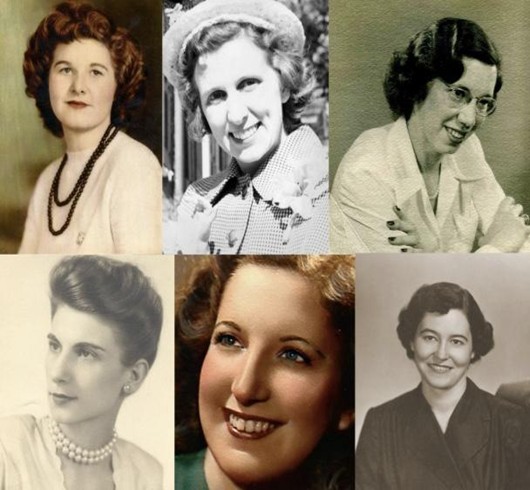
During World War II, thousands of women worked as human “computers” — solving complex mathematical problems by hand. The women who programmed the ENIAC, one of the first general-purpose computers, laid the groundwork for modern coding.
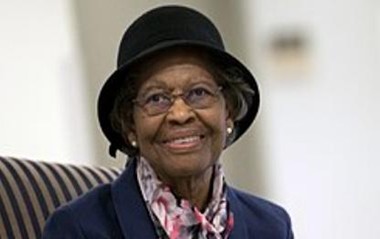
And in the Global South, mathematician Gladys West made groundbreaking contributions to the development of satellite geodesy and the mathematics behind the Global Positioning System (GPS). Coming from a farming family in Virginia and working during a time of racial and gender segregation, her precise calculations on the shape of the Earth and satellite data processing have shaped the modern navigation systems we rely on every day. Her story highlights that women’s foundational impact on computing has always been global.
These women were not exceptions. They were part of a hidden workforce — until a shift in cultural and economic values, particularly in the 1980s and 1990s, rebranded computing as a “masculine” domain. Marketing campaigns for early home computers targeted boys. University curricula grew more exclusive and male-dominated. Women’s contributions were increasingly dismissed or forgotten.
This gendered rewriting of computing history continues to shape today’s realities. Girls are often socialized to see tech as “not for them.” In classrooms, coding clubs, and gaming communities, many face subtle and overt exclusion. Even when women enter the field, they often encounter hostile work environments, pay gaps, promotion ceilings, and a lack of mentorship and representation.
Yet, women continue to reshape the tech world — often in ways that prioritize ethics, inclusion, and community benefit. Some examples:
- Timnit Gebru, a leading AI ethics researcher, co-authored foundational work on algorithmic bias and co-founded the Black in AI network.
- Joy Buolamwini founded the Algorithmic Justice League, exposing facial recognition bias in systems from IBM and Microsoft.
- Feminist Internet, a UK-based collective, combines design, activism, and research to build technologies that promote equality and justice.
Around the world, women-led tech initiatives are creating inclusive platforms, developing AI tools to support survivors of gender-based violence, or mentoring the next generation of diverse coders. From São Paulo to Nairobi, from Sarajevo to Bangalore, women are not only reclaiming space in tech — they are reimagining what technology can be.
Representation isn’t just symbolic. When girls and young women see women coding, leading, questioning, and innovating, they begin to see themselves in those roles. They are empowered to challenge stereotypes and take ownership of their digital futures.
Recognizing and celebrating women’s contributions to AI is not just a matter of historical justice. It is about redefining power, knowledge, and creativity in the most influential domain of the 21st century.