
Self-care: A luxury, selfishness, or necessity?
The concept of “care” is nothing new. It refers to intentional actions aimed at meeting the needs of those around us—children, family, friends, clients, communities, or society. However, when we talk about “self-care,” perceptions shift, and many people view it as unnecessary, time-consuming, selfish, or even a luxury they cannot afford.
This mindset often leads to personal struggles, increased stress, a higher risk of burnout and psychosomatic issues, and an overall decline in life quality. In reality, self-care is the foundation of long-term resilience. It is the conscious and active care for our physical, emotional, mental, and social needs.
Self-care is not just about personal well-being but also involves broader cultural, organizational, and societal aspects that support individuals’ mental, physical, and emotional well-being. It occurs on multiple levels, including:
- ✅ Organizational level (institutions, schools, companies)
Concrete examples of self-care at the organisational level include the creation of appropriate working conditions (ergonomics and healthy work environment, work-life balance support, work culture), psychosocial support and programmes to promote well-being and prevent burnout.
- ✅ Cultural level (values, norms, attitudes in society)
Changes at the level of rigid patterns that devalue self-care and relaxation. Developing a public debate on mental health. Inclusion of self-care topics in early education in schools. Awareness raising in the media or on social media.
- ✅ Systemic level (legislation, policies, systemic measures)
Creating conditions for work-life balance, providing infrastructure to support family care. Strengthening available social and psychological services. Accessible and quality health services.
👉 As we can see, self-care is a multi-layered concept that is important at both the individual and systemic levels. Let us now take a concrete example of how self-care works in the context of the health system. This example will allow us to understand self-care and its implications in a broader context with a gender perspective.
Self-care and access to health services
Health care is an important part of self-care. However, about half of the world’s population does not have access to basic health services. For women, this problem is made worse by gender stereotypes, social stigma, unequal power, and low income.
A study in “Nature Medicine” showed that self-care can improve women’s health and well-being, and also support goals like gender equality and human rights.
Some good examples illustrating these problems, solutions and possible impacts are the following ones:
✅ Mobile health apps for women in rural areas
- Problem: Many women in rural areas cannot easily visit clinics.
- Self-care solution: A mobile app that provides pregnancy tracking, reminders for prenatal vitamins, and information about warning signs.
- Impact: Women can monitor their health and seek help earlier, reducing maternal risks and promoting equal access.
✅ Mental Health Hotlines
- Problem: Social stigma stops many women from seeking mental health care.
- Self-care solution: Confidential hotlines or chat services that provide counseling and coping strategies.
- Impact: Reduces isolation, empowers women to take care of their mental well-being, and bypasses barriers like stigma or cost.
✅ Education Programs for Self-Monitoring
- Problem: Lack of knowledge about basic health monitoring (e.g., blood pressure, glucose levels).
- Self-care solution: Workshops teaching women to use affordable home devices and interpret results.
- Impact: Early detection of health issues and reduced dependency on inaccessible clinics.
The figure below shows a view of the building blocks of a health system, with indicators such as access, quality, coverage and safety used by sub-countries to assess the performance of their health systems.
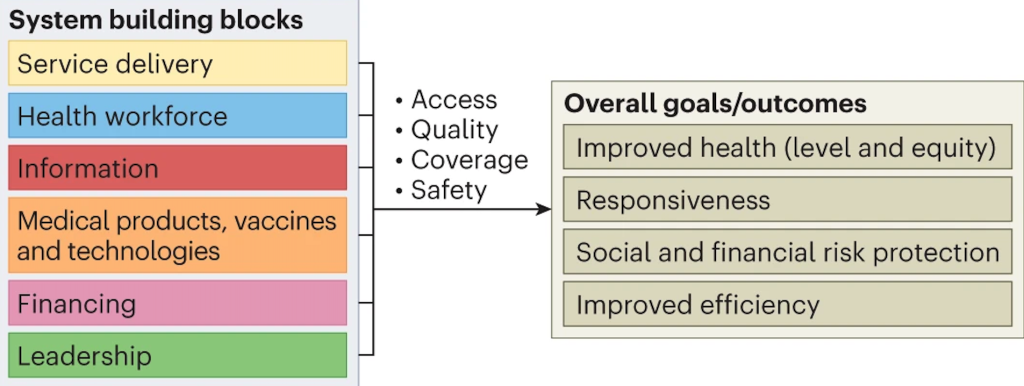
Source: WHO health system building blocks to support self-care interventions. Available at: https://www.nature.com/articles/s41591-024-02844-8/figures/2
On the right hand side are key outcomes that lead to better health outcomes, more resilient services, protection from social and financial risks and improved efficiency. And it is a gender lens on the whole issue of self-care that has the potential to transform traditional health care systems and improve outcomes for women and other underserved groups.
👉 It’s more than obvious that self-care is not just about individuals. Supportive conditions also need to be created at a systemic level, which creates a broader context and brings about structural change. Now let’s look at what dimensions of self-care we can develop in our lives.