
Self-care is a multifaceted concept that encompasses a number of dimensions. In the literature, we encounter different models that emphasize similar aspects. D. L. Stoewen (2017) distinguishes 8 dimensions of self-care. These include:
- ✅ Physical dimension (care for health and physical well-being)
- ✅ Intellectual dimension (expanding knowledge, skills, lifelong learning)
- ✅ Emotional dimension (strengthening understanding of one’s feelings, values, thoughts, attitudes, developing empathy and respect for others)
- ✅ Social dimension (developing friendships and intimate relationships, caring for others, contributing to one’s community)
- ✅ Spiritual dimension (finding and developing meaning in life, engaging in activities that contribute to finding it)
- ✅ Professional dimension (applying one’s knowledge, skills and gifts in meaningful work, finding personal satisfaction in professional life)
- ✅ The financial dimension (knowing how to manage one’s finances to meet short and long-term needs)
- ✅ Environmental dimension (understanding the impact of the environment on our health and well-being)
A similar model can be found, for example, in S. Fisher (2020) who, in line with the concept of self-care, calls these dimensions as:
- S-systemic dimension
- E-motive dimension
- L-uminiscent dimension
- F-inancial dimension
- C-ognitive dimension
- A-ptitudinal dimension
- R-elational dimension
- E-environmental dimension
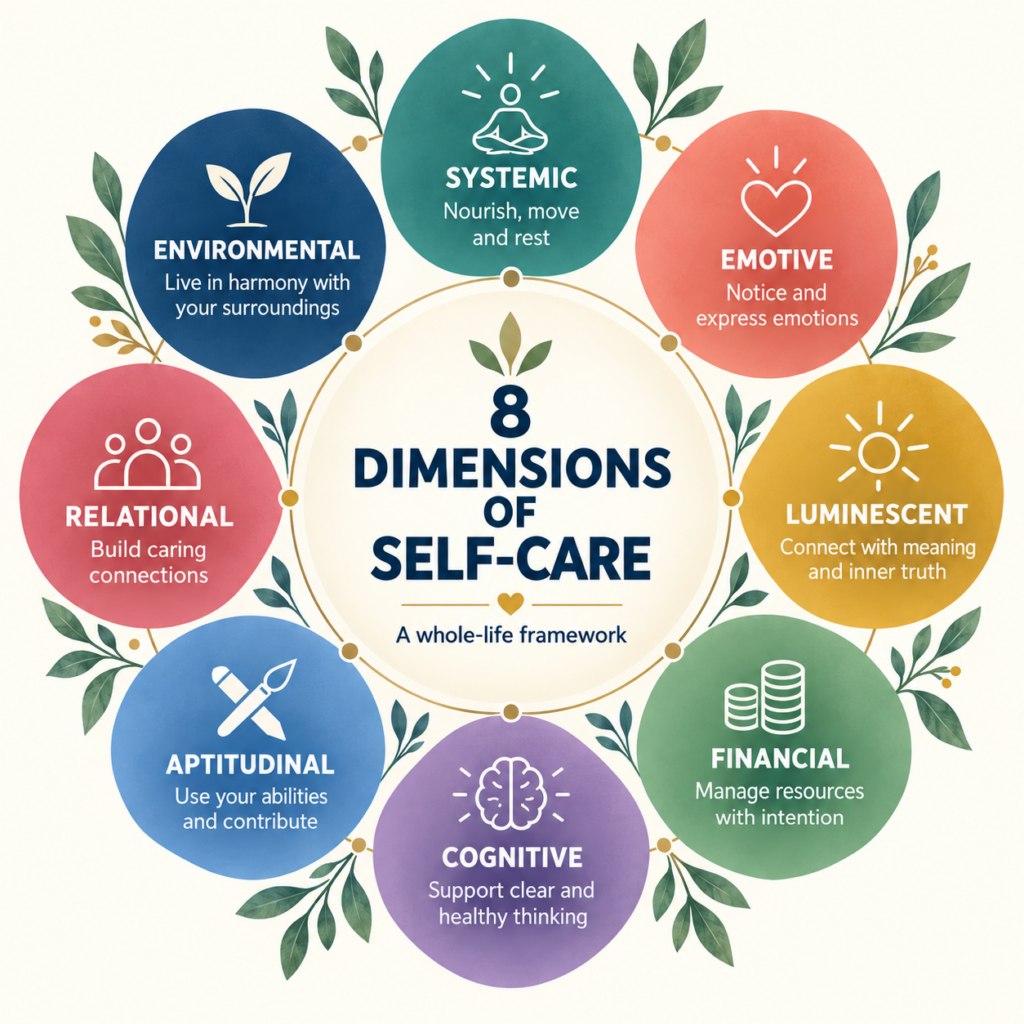
👉 All of these dimensions, or dimensions of self-care, affect our lives and how we function in relationships and society. And that’s no small thing, is it? So we can probably agree that self-care is neither a luxury nor selfish. Without self-care, we will languish and be more susceptible to weakening our mental and physical health. Let us now look in the last section of this chapter at how we can strengthen each dimension or dimension of self-care.